


The Science of a Better Bedtime: Replacing Screen Time with a Sensory Ritual
If you’ve ever found yourself lying in bed, physically exhausted but mentally racing after an hour of late-night scrolling, you’ve experienced a modern paradox. We use digital devices to unwind, yet their light and content often leave us more alert, not less. The culprit is biology. The blue light from screens suppresses melatonin, the hormone that regulates sleep. More importantly, the engaging, often stressful nature of digital content—from work emails to social comparisons—activates our sympathetic nervous system. This is our "fight-or-flight" mode, a state of high alert perfectly suited for a crisis but entirely counterproductive for sleep. We’re trying to slam the brakes while our foot is still on the accelerator.
True rest requires a transition, a conscious bridge from the external, stimulating world to an internal state of calm. This bridge isn’t built with more information or entertainment, but with its opposite: sensory grounding. By creating a simple, screen-free ritual that focuses on physical sensation—particularly touch—we can manually guide our nervous system from "on" to "off," transforming the struggle to fall asleep into a natural process of drifting off.
The Biology of the Wind-Down: Finding the "Off" Switch
To create an effective ritual, it helps to understand what we're trying to accomplish neurologically. Your body doesn't have a simple sleep button; it has a balancing act between two branches of the autonomic nervous system.
The sympathetic nervous system is your body’s performance engine. It’s engaged by stress, excitement, focus, and, critically, by cognitive engagement with screens. It increases your heart rate, primes your muscles, and sharpens your mind—it’s the state of "doing."
Its counterpart is the parasympathetic nervous system. This is the system of "rest and digest." It lowers your heart rate, directs energy toward repair and renewal, and allows sleep-promoting signals to rise. It’s the state of "being."
The issue with pre-screen "relaxation" is that it often secretly engages the performance engine. A thrilling plot, a challenging game, or even the rapid, disjointed browsing of social media keeps the sympathetic system subtly activated. Your body remains in a state of low-grade readiness.
A tactile, body-focused ritual works differently. It bypasses the cognitive pathways stimulated by screens and speaks directly to the body's sensory network. Gentle, consistent pressure, warmth, and rhythmic movement are some of the oldest signals of safety we know. They tell the primal parts of your brain that you are not under threat, that it is safe to stand down. This sensory input directly stimulates the parasympathetic nervous system, applying the brakes and initiating the physiological cascade that leads to deep, natural sleep. Think of it not as fighting your alertness, but as convincing your body that the alert is over.
Designing Your Personal Pre-Sleep Ritual: A Sensory Journey
An effective wind-down ritual is less about strict technique and more about guided attention. The goal is to move your awareness from your swirling thoughts and into the physical sensations of your body, systematically releasing the muscular tension accumulated from the day. A simple 10-minute sequence can be profoundly effective.
Start at the bottom, with your feet and calves. Throughout the day, gravity pulls fluids downward. A few minutes of gentle, upward massage on your calves isn't about deep therapy; it's a signal of hydraulic reprieve. Using slow, gliding strokes from ankles toward knees promotes mild venous return, easing that heavy, restless feeling. Symbolically, it grounds you, pulling awareness from your head and into your physical foundation.
Next, address the central pillar of stress: your back. The muscles along your spine, like the erector spinae, are where we hold the physical tension of posture, sitting, and emotional bracing. Lying down, apply gentle, sustained pressure to the areas flanking your spine, not on the spine itself. The goal is to "melt" the rigidity, to soften the structural holding pattern of the day. Releasing this core tension is often the key that allows your entire body to relax fully against the bed.
Finally, turn your attention to the command center: your neck and shoulders. This is where stress becomes armor, in the hunched tension of the upper trapezius and levator scapulae muscles. This area requires the lightest, most compassionate touch. Gentle kneading at the top of the shoulders and the base of the skull can feel like unclenching a fist you didn't know you were making. As you release this protective hunch, you send the final, critical signal to your nervous system that vigilance can cease.
Conclude by integrating. Lie still for a moment, place a hand on your chest, and take a few deep breaths. Feel the new, quiet landscape of your body. Sleep becomes the natural next step from this state of felt safety.
How the Right Tools Can Facilitate the Transition
For this ritual to consistently work, the environment and tools must support the goal of parasympathetic activation. Any element that is jarring, loud, or overstimulating can break the fragile state of calm you're cultivating.
Sound is paramount. A quiet environment is essential, and any tool used should be a friend to silence. A loud, buzzing device reintroduces the very kind of abrasive sensory input you're trying to escape. The ideal tool operates with a whisper, its sound a soft background hum that fades into awareness rather than dominating it.
The type of sensation matters greatly. While intense, percussive massage has benefits for workout recovery, it is inherently stimulating to the nervous system. The pre-sleep ritual calls for gentler modalities. Soothing, wave-like motions such as gentle kneading or rolling, and, most effectively, consistent warmth, are ideal. Heat is a powerful direct stimulant of the parasympathetic system. It relaxes blood vessels, soothes stiff tissue, and provides a profound, psychologically comforting signal of safety—like a warm embrace for your muscles.
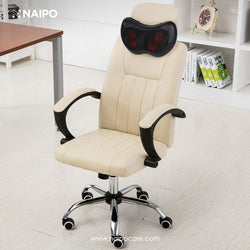
A device designed with this specific use case in mind transcends being a simple massager. For instance, a tool like a Naipo massager that incorporates quiet warmth technology and gentle oscillation modes becomes a dedicated facilitator of the wind-down ritual. Its purpose is to deliver the consistent, comforting physical cues—soothing warmth and rhythmic pressure—that guide the body systemically toward rest. A soft, warming head can help maintain perfect, relaxing pressure along a tight spine or shoulders, extending the comfort your own hands can provide and making the ritual effortless to maintain.
By investing in a brief, screen-free sensory ritual, you are doing more than improving sleep. You are reclaiming the critical threshold between day and night. You are trading the anxious, fragmented energy of digital consumption for the focused, calming energy of self-attunement. In doing so, you stop chasing sleep and start creating the precise physiological conditions from which it effortlessly emerges.
Written by NAIPO CARE


Leave a comment
This site is protected by hCaptcha and the hCaptcha Privacy Policy and Terms of Service apply.