

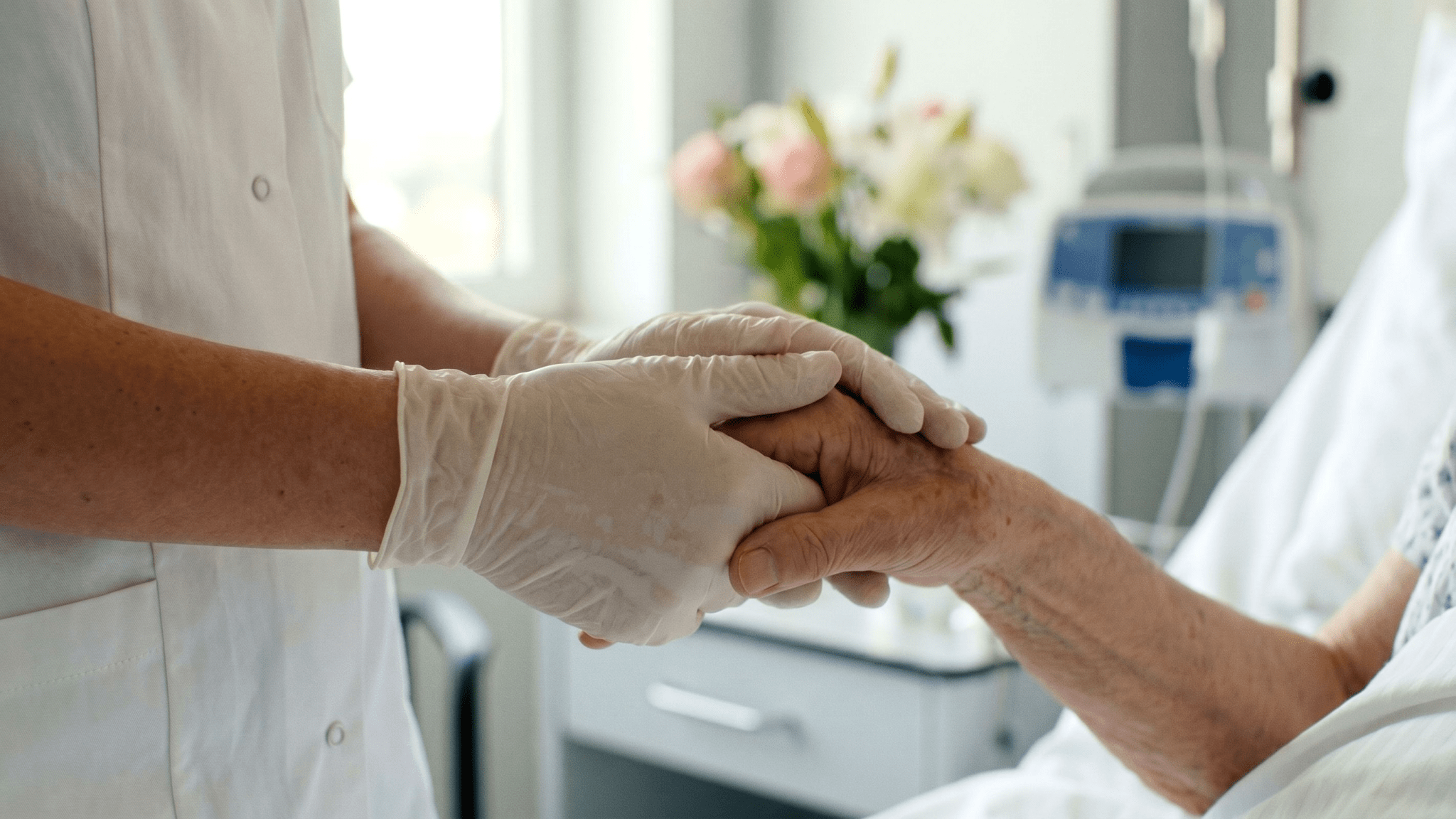
Honoring Our Heroes: A Guide to Self-Care for Nurses This International Nurses Day
On May 12th, the world paints a sea of blue and white, shares messages of gratitude, and honors the legacy of Florence Nightingale. We speak of courage, compassion, and sacrifice. But today, we want to speak of something quieter, more personal, and often left unacknowledged: the physical weight of that compassion.
International Nurses Day is more than a date; it’s a feeling. It’s the collective exhale of a profession that has held its breath through crisis after crisis. It’s in the quiet pride of a family member, and the profound gratitude of a healed patient. But for the nurse themselves, this day might also brush against a deep, familiar ache—the one that settles into the lower back after a double shift, that hums in tired calves after miles of hospital corridors, that tightens the shoulders into a permanent state of readiness.
This is the unseen labor. The body’s testimony to hours spent standing vigil, lifting, turning, comforting, and running. The hands that administer life, now curled slightly even at rest. The feet that have walked the path between hope and heartbreak, now swollen and pleading for respite.
Today, we don’t just say “thank you.” We say, “We see you. We see all of you.” Not just the hero in scrubs, but the human being within them—the one who carries the ache home.
The Anatomy of a Shift: Where Compassion Leaves Its Mark
To understand recovery, we must first honor the strain. A nurse’s work isn’t just mental or emotional; it’s a full-body endeavor.
-
The Feet and Legs: The Foundation. Imagine the physiology of a 12-hour shift. The slow, persistent pull of gravity on circulation. The subtle, constant micro-tremors in muscles meant for motion, now locked in stance. The feet, cushioned in supportive shoes, still bear the entire weight of a soul dedicated to others. The result isn’t just “tired legs”; it’s a specific, heavy fatigue, a dull ache that can whisper of varicose veins and stubborn swelling. It’s the body’s plea for assisted circulation, for the gentle, upward encouragement that says, “Let me help carry this, for a while.”
-
The Back and Shoulders: The Armor of Readiness. There is a posture of care: leaning forward to listen, hunching over a screen, bracing to support a patient. The trapezius and latissimus muscles become not just tissue, but a shield of tension. This is where stress crystallizes into physical form—knots that feel like marbles embedded under the skin, a stiff neck that turns the simple act of checking a blind spot into a chore. This tension is the body’s armor, but it’s armor that never gets taken off. Releasing it requires more than a deep breath; it requires deliberate, physical unwinding.
-
The Whole Being: The Exhaustion That Sinks Into Bone. Finally, there is the systemic fatigue that transcends any single muscle group. It’s the nervous system, humming on a high-alert frequency long after the shift ends. It’s the restless sleep that doesn’t refresh. This exhaustion is a full-body phenomenon, asking not for a spot treatment, but for a systemic reset. It asks for an environment where the world can be shut out, where the body can feel truly supported and the mind can finally, fully, let go.
True recovery for a nurse isn’t about luxury; it’s about physiological justice. It’s about giving back to the body what the day’s work has taken away.
A New Prescription: Care Strategies for the Caregiver
What if recovery could be as intentional and structured as the care you provide? Here are ways to speak your body’s language and answer its calls for help:
1. For the Foundation: The Science of Active Recovery. Elevation and rest are good, but active recovery is better. The principle is simple: to mimic the muscle pump of walking and the gentle, rhythmic pressure of manual lymphatic drainage. Think of a treatment that applies a wave-like compression, starting at the ankle and moving upwards, coaxing fluids and metabolites through tired tissue. It’s a sensation of being firmly, lovingly squeezed and released, a guided journey for your circulation that says, “I’ve got you. Let’s move this stagnation out.” It’s the antidote to the stagnant, heavy feeling in limbs that have given all their energy away.
Product Connection: The Naipo MGF-301 Air-Compression Boots. This is the technology that translates that principle into action. Designed like a therapist’s hands for your lower limbs, its multiple air chambers engage in a sequential wave, from your feet up to your thighs. It’s not just pressure; it’s a rhythm. You can control the intensity, finding the perfect balance between a firm, therapeutic squeeze and gentle comfort. With a long-lasting battery, it’s a session you can have at the nurse’s station on a break or sunk into your couch at home. It doesn’t ask for your effort; it gives all its effort to you, working to ease swelling and replace that heavy ache with a light, revitalized feeling.
2. For the Armor: Releasing the Fortress of Tension. Sometimes, the tension is too specific, too stubborn for a stretch. It’s a knot the size of a thumbnail, holding the memory of a difficult day. This is where targeted percussion comes in—a rapid, concentrated pulse that reaches deep into the muscle belly. This isn’t a vague vibration; it’s a mechanical thumb, applying direct, adjustable pressure to break up adhesions and increase blood flow exactly where it’s needed. The right tool feels like an extension of your own will to heal, powerful yet precise enough to navigate the delicate landscape of your own shoulders and neck.
Product Connection: The Naipo NPMGUN-J11 Massage Gun. Think of it as your personal tension detective. Its sleek, lightweight design belies a profound power. With multiple attachments, you can choose a broad head for the meaty part of a calf or a precise, pointed tip to hunt down that stubborn knot between your shoulder blades. The adjustable speeds let you start gently on sore spots and increase intensity for deeper tissue. It’s professional-grade relief in a form so elegant and portable, it can tuck into a locker or a bag, ready for you whenever the armor needs to be softened, whenever you need to reclaim the feeling of pliable, supple muscle.
3. For the Whole Being: The Sanctuary of Zero-Gravity. Some days demand a total surrender. This is for the exhaustion that lives in your bones. The concept is rooted in a simple, beautiful idea: to distribute your weight so perfectly that your spine is completely relieved of pressure. This is the zero-gravity state. Now, imagine combining that weightless floating with a massage that intelligently tracks every curve of your spine, from the cervical vertebrae in your neck all the way down to the hamstrings. Add the embrace of air compression for your limbs and the deep, soothing warmth of heated panels on your lower back. This is no longer a “treatment”—it’s an experience. It’s a sensory cocoon that actively quiets the nervous system, guiding you from sympathetic overdrive (fight-or-flight) into parasympathetic rest (rest-and-digest). It’s a scheduled, non-negotiable retreat.
Product Connection: The Naipo MGC-805 Massage Chair. This is the creation of that sanctuary. It begins by reclining you into a true zero-gravity position, a feeling of profound physical release. Its advanced 3D massage mechanism doesn’t just go up and down; it rolls, kneads, and taps with a depth that feels human. The airbags gently compress your arms and legs in a wave-like pattern, while carbon-fiber heat soothes your core. Control it effortlessly with your voice or a touchscreen. It’s more than a chair; it’s a statement—a dedicated space in your home that affirms, “Your total well-being is the priority here.”
A Final, Heartfelt Note
On this International Nurses Day, we at Naipo offer our deepest, most humble gratitude. You are the steady hands in the chaos, the calm voice in the storm. You are the first touch of comfort and the last witness to a struggle.
Today, we ask you to turn that incredible power of care, just for a moment, inward. See your own fatigue not as a weakness, but as the honorable scar of your service. Listen to the ache in your feet as a story of miles walked in service. Feel the tension in your back as the memory of burdens you helped carry.
You have spent countless hours studying the anatomy of others. Today, we ask you to honor your own.
You are the gift to the world. All we hope is to offer a small tool—a moment of compression, a release of tension, a space of weightless rest—that helps you continue to be that incredible gift, for many, many days to come.
Ecrit par NAIPO CARE



Laisser un commentaire
Ce site est protégé par hCaptcha, et la Politique de confidentialité et les Conditions de service de hCaptcha s’appliquent.