

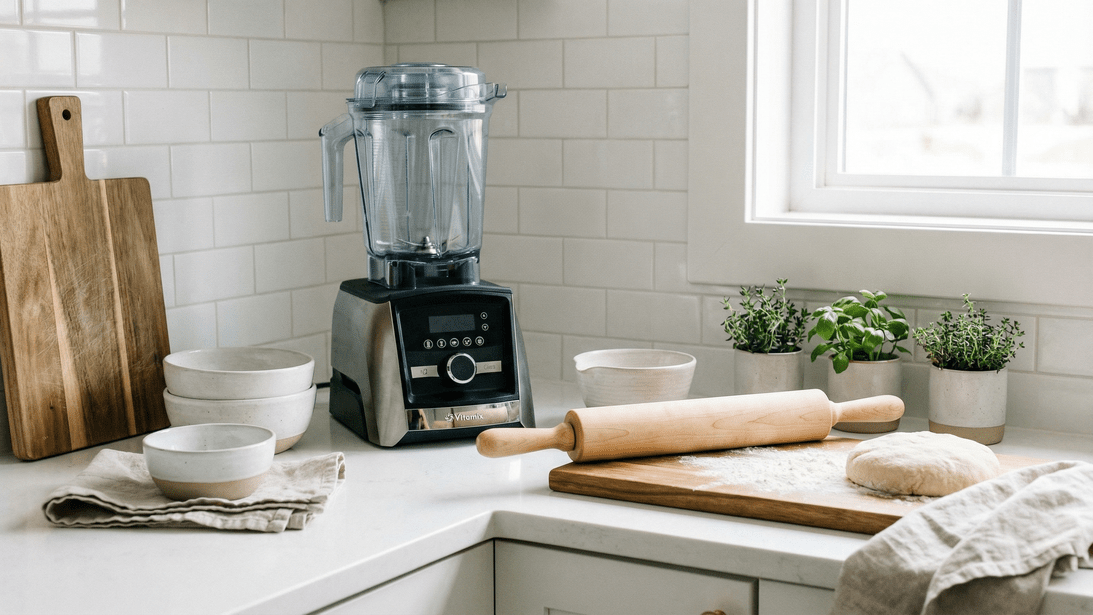
The Culinary Cure: How Your Rolling Pin Became Your New Favorite Therapist
Let’s be honest—most of us have spent a small fortune chasing wellness. We’ve ordered jade rollers that now gather dust in bathroom drawers, downloaded meditation apps we open only when we can’t sleep, and attempted yoga poses that left us questioning both our flexibility and life choices. We’ve been told to find peace in nature, tranquility in tea, and serenity in silence. But what if the most effective, accessible, and delicious form of self-care has been hiding in plain sight all along? What if the answer isn’t in a studio, but in the studio… apartment kitchen you’ve been complaining about since you moved in?
I’m here to let you in on a beautifully kept secret: your kitchen is not just a room where food reluctantly becomes dinner. It is, in fact, a fully equipped, multisensory wellness retreat. And the best part? Membership is free, the dress code is strictly pajama-friendly, and the rewards are almost always edible. This isn’t about gourmet perfection or Instagram-worthy plating. This is about rediscovering the simple, rhythmic, deeply human acts of cooking as a form of moving meditation, physical therapy, and creative release—all while potentially producing a loaf of sourdough that could make you weep with joy.
The Accidental Epiphany: How a Batch of Bad Day Dough Changed Everything
My own awakening occurred on a day that can only be described as “a series of unfortunate Microsoft Teams notifications.” My shoulders were knotted with the distinctive tension that comes from back-to-back virtual meetings, my wrists ached with the ghost of a thousand typed messages, and my mind buzzed with the unresolved static of a dozen unfinished tasks. The idea of a formal workout felt as plausible as climbing Everest in slippers. What I needed, I decided, was not to domore, but to makesomething. Something simple, tangible, and, ideally, carbohydrate-based.
The recipe called for kneading—ten full minutes of it. I sighed, dusted the counter with flour, and began. The first minute was pure frustration. The dough was shaggy, stubborn, and stuck to my fingers like a needy pet. The second minute was marginally better. But by the third minute, something shifted. The repetitive, physical motion—push with the heel of the palm, fold the dough over, give it a quarter turn—began to create a rhythm that slowly overrode the chaotic tempo of my thoughts. My focus narrowed from the worries of the day to the singular, immediate reality in my hands: the transformation of a ragged mass into something smooth, elastic, and alive.
I wasn’t just making bread; I was engaging in a silent, strenuous dialogue with gluten. The slight, chronic ache in my right wrist, a souvenir from my computer-centric existence, met its match in the gentle, persistent resistance of the dough. It was as if each push and fold was physically pressing the stiffness out of my joints. The tight coil of stress in my forearms began to unspool. Ten minutes later, I placed a perfect, round boule into an oiled bowl, covered it, and felt a profound sense of calm I hadn’t achieved in weeks. I had made bread, and in the process, the bread had, quite literally, remade me. I had stumbled upon a truth so simple it felt radical: The kitchen, in its gentle demand for our physical presence, heals the very parts of us that modern life strains the most.
Decoding the Menu: A Prescription for Culinary Therapy
Once you see it, you can’t unsee it. Every recipe, every technique, reveals itself as a potential modality for well-being. Welcome to the Culinary Therapy Clinic. Your first session starts now.
Treatment One: The Deep Knead (For Wrists, Minds, and Emotional Baggage)
-
The Motion: The foundational, rhythmic act of kneading bread, pasta, or pastry dough. It is a whole-body engagement centered in the hands, wrists, and forearms.
-
The Science of Soothe: This is where wrist stiffness meets its gentle nemesis. The adaptive resistance of dough provides perfect proprioceptive feedback—it tells your joints and muscles where they are and gently strengthens them. The slow, bilateral motion (using both sides of your body) enhances coordination and can have a calming, organizing effect on the nervous system. It’s a form of "heavy work," a concept occupational therapists use to describe activities that provide deep pressure input, reducing anxiety and improving focus.
-
The Mental Marinade: Perhaps more powerful is the mental shift. Kneading requires a sustained, repetitive focus that effortlessly pushes out mental clutter. It’s a moving meditation with a delicious, tangible result. You are forced into the present moment—if your mind wanders, the dough will tell you by becoming tough or sticky. The rhythm becomes a mantra: push, fold, turn, breathe.
-
The Protocol: Commit to a full 8-10 minutes. Set a timer, put on a podcast or an album, and don’t stop until the dough is smooth and your timer dings. The transformation in the dough will mirror a perceptible softening of your own tension.
Treatment Two: The Rolling Repetition (For Forearm Flow and Precision Calm)
-
The Motion: The graceful, outward-radiating roll of a pin to create pie crusts, dumpling wrappers, or cookie dough. The delicate, intricate work of folding, sealing, and pleating.
-
The Science of Soothe: This is forearm therapy disguised as dinner prep. The motion of rolling engages the often-overlooked flexor and extensor muscles of the forearms, promoting circulation and releasing the tightness that comes from hours of gripping phones and keyboards. The fine motor skills required for activities like shaping dumplings or crimping a pie crust stimulate neural pathways and demand a quiet, focused attention that crowds out stress.
-
The Mental Marinade: This practice cultivates what psychologists call a "flow state"—that blissful zone of complete immersion in a task. The goal is clear (sixty identical wrappers), the feedback is immediate (too thick, too thin, just right), and the challenge matches the skill. It’s impossible to fret about tomorrow’s deadline when you’re responsible for ensuring today’s pork and cabbage stay neatly enclosed in their delicate pasta envelope.
-
The Protocol: Embrace the batch work. Don’t roll one wrapper; roll fifty. The repetition is the point. The first ten might be clumsy, but by the thirtieth, your hands will have found their own intelligent rhythm, and your mind will feel startlingly clear.
Treatment Three: The Steady Stir (For Rhythmic Reset and Simmering Down)
-
The Motion: The slow, steady, almost hypnotic stirring of a risotto, a béchamel, a pot of polenta, or a jar of homemade mayonnaise.
-
The Science of Soothe: This is the ultimate rhythm regulation for a frazzled mind. The predictable, circular motion acts as a physical metronome, synchronizing breath and calming the heart rate. Studies on rhythmic activities like drumming or rocking show they can lower cortisol levels. Standing over the warmth of the stove, engaged in this simple custodial task, creates a pocket of sensory comfort and predictable outcome.
-
The Mental Marinade: The sustained stir is a masterclass in patience and present-ness. You cannot rush a risotto. You must be there, in real time, as the broth is absorbed and the starches release. This enforced slowdown is a potent antidote to a world built on instant gratification. It’s a time to let your mind wander creatively, to daydream, or to simply watch the transformation in the pot—a lesson in how small, consistent actions lead to rich, fulfilling results.
-
The Protocol: Choose a dish that requiresyour presence. Put your phone in another room. Let the stirring be the main event, not a side task. Listen to the sizzle, watch the bubbles, and stir your way back to your center.
The Secret Ingredients: Why Culinary Therapy is Uniquely Powerful
The magic of this practice lies in a powerful alchemy of elements that most formal wellness routines lack:
-
The Tangible Reward: This is the clincher. You don’t finish a physiotherapy session and get to eat the therapy putty. The direct line between effort and edible, shareable reward is a dopamine jackpot. The brain learns to associate the calming, physical activity with a deeply satisfying outcome, making you want to return to it.
-
Multi-Sensory Engagement: Cooking is a full-brain workout. It engages touch (textures of dough, grain of salt), smell (toasting spices, baking bread), sound (the sizzle, the crunch), sight (vibrant colors, visual transformation), and, of course, taste. This rich sensory input grounds you firmly in the present moment, a core principle of mindfulness.
-
Creative Agency Without Pressure: Unlike a blank canvas, a recipe provides a helpful framework. You are creating, problem-solving, and expressing care, but within guided boundaries. This balance of structure and creativity is inherently therapeutic and empowering.
-
The Legacy of Nourishment: In these acts, we connect to a timeless human lineage. We are doing what generations before us have done to feed, comfort, and care for themselves and others. There is a profound, unspoken comfort in this continuity.
So, the next time you feel the world’s weight settling into your shoulders, don’t just scroll through your wellness apps. Walk to your kitchen. Take out the flour, the rolling pin, the wooden spoon. See these not as mere tools, but as instruments of restoration. Approach the counter not as a chore zone, but as your personal sanctuary.
Start small. Whisk a vinaigrette until your wrist feels loose. Knead a single biscuit’s worth of dough. Stir a pot of oatmeal with deliberate, calm circles. Pay attention to the sensations in your body and the quieting of your mind. You may just find that the most nourishing thing you prepare is not on the plate, but in the peaceful, capable, flour-dusted hands that made it. Your kitchen has been waiting to welcome you home, in every sense of the word. All you have to do is turn on the light, and begin.

Ecrit par NAIPO CARE


Laisser un commentaire
Ce site est protégé par hCaptcha, et la Politique de confidentialité et les Conditions de service de hCaptcha s’appliquent.