

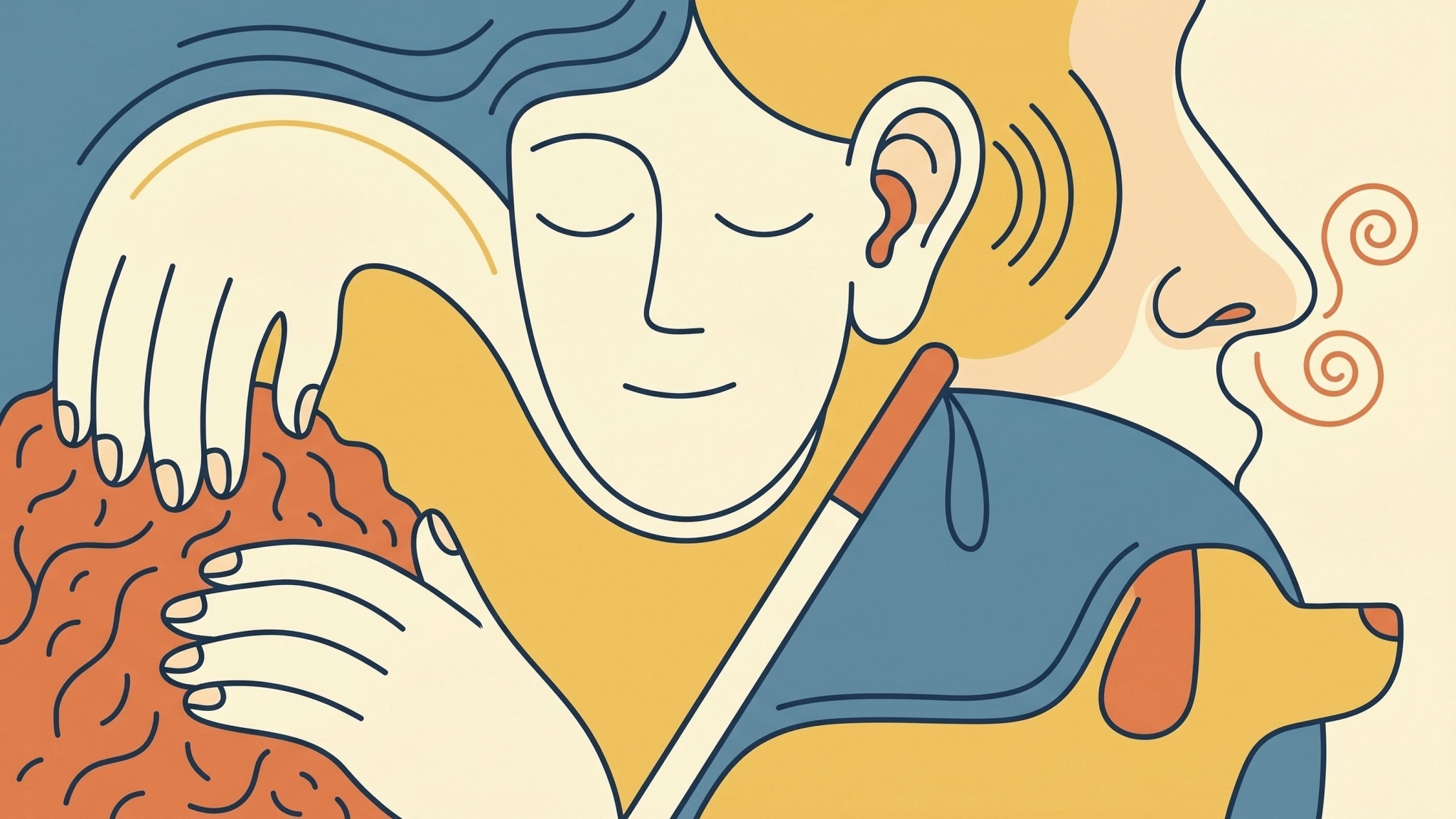
The Brilliance of Touch How Blind Therapists Redefine Healing
The notion that blind individuals might possess a heightened tactile sense has long lingered in cultural anecdote, often veering into myth or stereotype. Yet, within the professional realm of therapeutic massage, a compelling and scientifically-grounded truth emerges: many blind and low-vision practitioners do not merely compensate for a lack of sight—they cultivate a profoundly different, and often superior, mode of perceptual intelligence. Their expertise is not born from a mystical "sixth sense," but from the remarkable neuroplasticity of the human brain, a lifetime of refined attention, and a unique cognitive relationship with the human form. To receive a massage from a skilled blind therapist is not to experience a substitute for visual practice, but to encounter a distinct and potent form of healing attunement.
The Neuroplastic Foundation: The Brain's Tactile Reinvestment
At the core of this advantage lies the brain’s extraordinary ability to rewire itself—a phenomenon known as neuroplasticity. In a sighted person, a significant portion of the brain’s cortical real estate, particularly the visual cortex, is dedicated to processing visual information. For an individual who is blind from birth or an early age, this valuable neural territory does not lie dormant.
Extensive neuroimaging studies, including work from institutions like MIT and the University of Montreal, have shown that the "visual cortex" in blind individuals is recruited for other functions. It becomes a super-processor for tactile and auditory information. When a blind massage therapist lays their hands on a client, the tactile signals from their fingers are not processed solely in the standard somatosensory cortex. They are also routed to and analysed in these vast, repurposed visual regions. This means they have, quite literally, more brainpower devoted to interpreting touch. The subtleties they perceive—the slight grain shift in a muscle fiber transitioning from healthy to tight, the minute temperature variation signalling inflammation, the fluidic texture of edema versus the fibrous knot of a trigger point—are processed with a resolution and cognitive depth that is physiologically distinct.
This is not about having more sensitive nerve endings in their fingertips (though heightened use can lead to slight increases in tactile acuity). It is about having a more powerful, more dedicated supercomputer for interpreting the data those nerve endings collect. Their touch becomes a high-definition diagnostic scan, where a sighted practitioner might be working in standard definition, their attention and neural resources divided across visual cues and tactile ones.
Cognitive Mapping: Building the Body from the Inside Out
A sighted massage therapist learns anatomy from textbooks, charts, and visual demonstrations. They build a visual-mental model of the human body—a map they look at. A blind massage therapist builds their understanding from the inside out. Their learning is inherently haptic and kinetic. They study through detailed relief models, through tracing structures on their own bodies, and most importantly, through their hands on instructors and classmates.
This creates a fundamentally different type of mental schema. Their internal map of the musculoskeletal, circulatory, and fascial systems is not a picture; it is a dynamic, three-dimensional construct based on pressure, depth, texture, and spatial relationship. When they work, they are not recalling an image of the trapezius muscle; they are accessing a memory of its precise feel: its borders, its fiber direction, its behavior under tension. This haptic intelligence allows for an uncanny precision. They can follow a single fascial strand with unwavering focus, feeling its connections and restrictions without their mind’s eye being pulled away by the surface appearance of the skin or the room’s environment.
Furthermore, their understanding of anatomy is stripped of visual assumptions. They are not influenced by a client’s posture as a visual shape, but read it purely as a pattern of tensions and compensations under their hands. This can lead to highly accurate assessments that bypass superficial presentation and go straight to the underlying structural narrative.
The Art of Deep Listening: Undivided Attention as a Clinical Tool
A massage room with a blind practitioner is a sanctuary of undistracted focus. There is no clock to glance at, no change in the light to note, no visual assessment of the client’s facial expressions (which can often be misleading). The entire universe of the session is contained in the dialogue of touch: the hands of the therapist and the body of the client.
This fosters a level of palpatory listening that is difficult to achieve otherwise. Every flinch, every subtle shift in breathing, every involuntary muscle guarding or release is communicated directly through their hands and attended to with their full cognitive presence. Their attention is not split; it is channeled into a single, profound stream of tactile communication. This allows them to respond in real-time with exquisite sensitivity, adjusting pressure, angle, and technique in a continuous feedback loop that is purely felt, not seen.
This extends to verbal communication as well. Without visual cues, their questioning and client check-ins are often more precise and deliberate. They rely on clear, descriptive language about sensation, which in turn educates the client to be more articulate about their own internal experience, deepening the therapeutic partnership.
From Superior Perception to Therapeutic Excellence
These advantages converge to create a specific and powerful therapeutic experience:
-
Pinpoint Accuracy: The ability to locate and define the epicenter of a problem—the "core" of a trigger point, the specific restricted fascial plane—is often exceptional. Work is efficient and focused.
-
Enhanced Safety: Their refined touch allows them to perceive tissue response at a very subtle level, often sensing guarding or resistance before it becomes painful for the client, enabling them to work effectively at the very edge of tolerance without crossing it.
-
Holistic Reading: Their whole-body assessment is naturally haptic. As they work, they are unconsciously building a map of interconnected tensions. A problem in the shoulder is felt in its relationship to the opposite hip, not just seen as an isolated issue.
-
Deeply Therapeutic Presence: The client, aware of the therapist’s complete, undistracted focus, often falls into a state of deep relaxation more quickly. There is an unspoken trust that emerges from being "listened to" so completely on a physical level.
Conclusion: A Different, Not a Lesser, Expertise
The excellence of the blind massage therapist is not an inspirational story of overcoming a limitation. It is a testament to human adaptation and a lesson in perceptual specialization. Their skill challenges the sighted assumption that vision is the primary or superior way of knowing the world. In the tactile domain of therapeutic touch, the brain’s rewiring, a haptic mode of learning, and a practice of undivided attention combine to forge a uniquely profound form of expertise. It is a reminder that true understanding often comes not from looking at a surface, but from learning to listen, with immense care and intelligence, to what lies beneath.
Ecrit par NAIPO CARE


Laisser un commentaire
Ce site est protégé par hCaptcha, et la Politique de confidentialité et les Conditions de service de hCaptcha s’appliquent.