

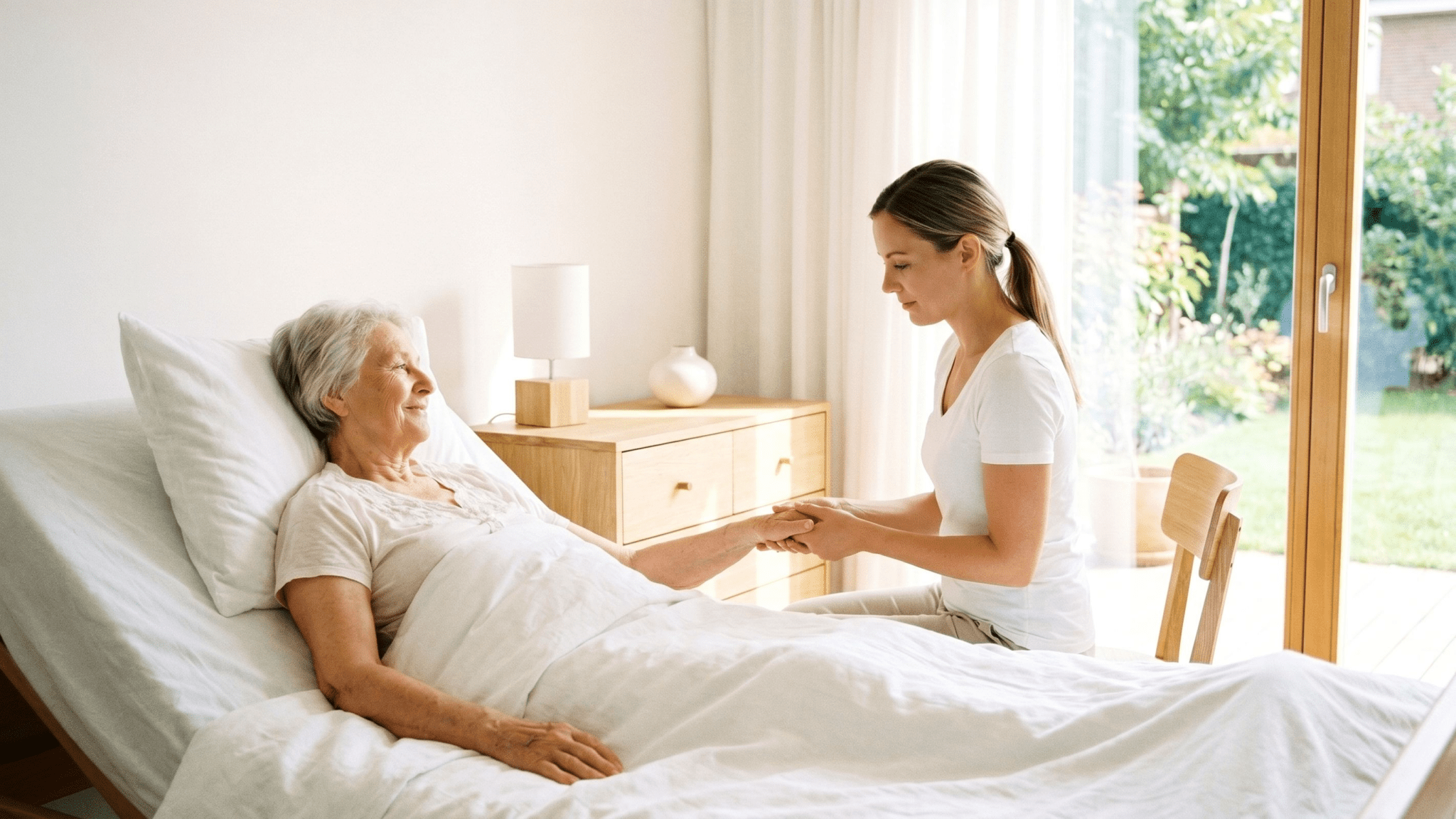
The Last Touch: A Massage of Presence at Life’s Threshold
I. The Last Touch: An Anatomy of Presence
There is a particular quality of light in a hospice room in Sussex, England, in the late afternoon. It is the colour of weak tea, falling through tall windows to pool on floorboards that have witnessed more farewells than welcomes. The air holds a complex bouquet: the faint, clean scent of linen, the medicinal whisper of antiseptic, and beneath it all, the subtle fragrance of lavender from a small dish on the bedside table. In this chamber, time has shed its urgency. It moves now to the rhythm of breath—slow, shallow, precious. Here, in rooms like this across Europe, a quiet revolution in care is unfolding. It is not found in a new pharmaceutical compound or a cutting-edge machine, but in the rediscovery of humanity’s oldest healing instrument: the human hand. In the sacred space between life and what comes after, touch is being reclaimed as the most profound and gentle of medicines. It is a pharmacology of presence, a therapy of pure being.
The massage that takes root here is unlike any other. Its primary goal is not muscle release, though that may gently occur. Its purpose is not detoxification, though a subtle unburdening often follows. Its intention is singular: to offer a bridge of unwavering companionship. The hands of a palliative massage therapist, like those of Elara who works in a similar house outside Zürich, are not tools of correction but instruments of communion. Their touch whispers the only true solace left to give: I see you. I am with you. You are not alone.
The session begins not with a technique, but with a silent ritual of arrival. The therapist will first still themselves, sitting quietly beside the bed, allowing their own breathing to deepen and settle. This is not performative; it is essential preparation. They are grounding themselves to become a stable shore for another who may feel adrift. The first contact is never an assumption. It is a question posed through the skin—a hand resting, palm up, an inch from the patient’s hand, an invitation. Or the lightest, most tentative hold of a wrist where the pulse flutters like a moth against a pane. Permission is sought in the space between breaths, in the slight turn of a head, in the minute relaxation of a tightened knuckle. The body, even in its profound vulnerability, remains the final arbiter of its own sovereignty.
II. The Hands at the Threshold: Techniques of Letting Go
The manual language spoken here is one of exquisite minimalism. It has been refined in centres from Glasgow to Ghent, a shared European vocabulary of comfort.
Effleurage as a Benediction: The classic gliding stroke is transformed. In the sports clinic, it warms tissue; here, it consecrates it. Using the weight of a shadow, the therapist’s hands, warmed with unscented or mildly neroli-infused oil, flow from the centre of the body outward. A stroke might begin at the shoulder and travel the impossible length of the arm to the very tips of the fingers, as if following a fading echo to its source. The pressure is so slight it barely depresses the sheet. Its purpose is not to manipulate muscle, but to map memory, to affirm the whole and beautiful geography of a person’s form one last, loving time.
The Cradle Hold & Still Touch: This is the heart of the practice. A therapist may simply enfold a patient’s hand between both of theirs, not moving, just transmitting a steady, living warmth. Or they may rest one hand lightly, with the certainty of a stone, on the sternum, over the heart’s quiet labour. Annette, a practitioner in a Berlin hospice, describes this: "You are not trying to doanything. You are trying to bea container. Sometimes, through that contact, you sense the shape of their distress—not as a localized pain, but as a quality of energy. It can feel dense, or frantic, or hollow. My job is to hold my own calm so steadily that it offers a quieter pattern for their system to resonate with, if it chooses." This is passive touch at its most active—a vigilant, compassionate holding of the space.
Gentle, Rhythmic Compression: On limbs grown frail, the therapist may apply a gentle, rhythmic squeezing, like a soft, reassuring pulse. A hand encircles a calf, applying and releasing pressure with the gentleness of a tide. This is not for venous return but for ontological grounding. In a time when the sense of self may be dissolving, this gentle, rhythmic pressure re-draws the boundaries of the body, offering a comforting sense of cohesion and containment. It says, You are here, in this form, and it is held.
Farewell to the Feet: A special attention is often paid to the feet. Across cultures, they are the symbol of our journey. In this context, they are honoured as the weary travellers they are. Using thumbs softer than thought, the therapist makes infinitesimal circles on the arches. Each toe is held, a moment’s gratitude for the miles walked, the dances completed, the ground once stood upon with vigour. It is a final, tactile tribute to a lifetime of motion, now settling into perfect rest.
III. The Ripple Effect: The Touch That Heals Beyond the Body
The impact of this parting touch radiates outward in concentric circles, a gentle stone dropped into the still pond of the dying process.
For the person departing, the physiological effects, while secondary, are meaningful. The gentle stimulation can prompt a release of endorphins, the body’s natural analgesics, taking the sharpest edge off pain. The profound parasympathetic nervous system response—triggered by the safety of the touch—can ease the agitation and restlessness that so often accompany the final transition. The body, held in kindness, finds permission to soften, to surrender its final tensions. But beyond the physical, the gift is one of profound dignity. In a medicalized environment, it is easy to become a "case." This touch re-establishes the person. It asserts, wordlessly, You are not your illness. You are a soul, worthy of beauty and tenderness until your very last breath.
The ripple extends to the family, the witnesses in the armchair by the wall, hollowed out by love and grief. To see their mother, father, partner, or child held with such unflinching, compassionate attention is a balm for their own helplessness. It models a way of loving that is not about fixing, but about abiding. It gives them permission to simply sit and hold a hand, freed from the burden of needing to dosomething. The touch becomes a shared language in a room where words have often failed.
And finally, for the therapist, this work is a continuous, humbling education in love and release. "We are not guides," says Marco, who works in a Milanese facility. "We are fellow travellers for a few, precious steps. We do not lead them to the threshold, for that is their own path. But we ensure they do not have to walk the last of it in tactile solitude. Our hands are simply a railing in the fog." This work demands a letting go of outcome, a surrender of the healer’s ego. The success is not in recovery, but in the quality of presence offered.
In a Western culture that has long sequestered death, turning it into a sterile, medical event, these hospice rooms across Europe represent a courageous return to the human, the intimate, and the sacred. The massage offered there is the ultimate act of contemplative touch. It prepares the body not for more life, but for a peaceful release from it. It is a touch that loves without clinging, that comforts without demanding, that bears witness without judgment. In the end, it reveals massage in its most essential, stripped-back form: no longer a service, but a sacrament—a final, gentle affirmation of one spirit to another, written in the silent, potent language of the hand.
Ecrit par NAIPO CARE

Laisser un commentaire
Ce site est protégé par hCaptcha, et la Politique de confidentialité et les Conditions de service de hCaptcha s’appliquent.